
Adapting to Drought Tolerant Gardening: Thriving in the Dry.

Updated: Sep 3

Written and edited by Tammy Johnson 30th May 2025
With climate patterns shifting and drought becoming a more common reality for so many of us, as gardeners we’re faced with the new challenge of how to keep our gardens thriving with less water.
Gardening during dry times isn’t about giving up and accepting defeat, it’s about getting smart and creative. By embracing some simple alternatives, our gardens can become more resilient, sustainable, and beautiful than ever.
Drought tolerant gardening concepts to embrace
1. Rethink Your Plant Choices
One of the best ways to drought-proof your garden is to choose plants that are naturally adapted to dry conditions. Look for Australian native species or drought-tolerant plants like salvia, lavender, echinacea, rosemary, ornamental grasses and succulents. Plants like these not only survive but thrive with minimal water, often have lower nutritional requirements, and most attract pollinators too.
Tip: Group plants with similar water needs together. This technique, known as hydrozoning, helps prevent overwatering and makes irrigation more efficient.
⸻
2. Improve Your Soil’s Water-Holding Capacity.
Healthy soil is like a sponge; it retains moisture and feeds your plants at the same time. You can improve your soil’s drought resistance by adding organic matter such as compost, worm castings, or well-rotted manure. These amendments boost microbial life, increase water retention, and help plants grow deeper, more drought-tolerant roots.
Bonus: A thick layer of mulch (3–4 inches) helps to regulate soil temperature, suppress weeds, and reduce evaporation.
⸻
3. Water Smarter, Not More
Instead of watering on a fixed schedule, water deeply and less frequently. Deep watering encourages plants to grow roots further down, where the soil stays moist longer. Use soaker hoses or drip irrigation systems to deliver water directly to the base of plants, minimising waste from evaporation or runoff. In our region Naracoorte SA and surroundings where hard water is problematic, drip irrigation and soaker hoses also eliminate the issue of hard minerals spoiling plant foliage.
Pro tips: Water in the early morning to reduce loss from evaporation and regularly check and maintain your irrigation fixtures and fittings for calcium buildup that can block and prevent it working efficiently.
⸻
4. Catch, save and utilise rainwater.
Install rainwater tanks to capture water from your house and shed rooves. The volume of water that can be harvested from one good storm or rain event can potentially keep your entire garden alive for months.
Low-tech hack: Dig small shallow trenches in your garden beds to help capture and retain rainwater where your plants need it most.
⸻
5. Wicking Beds
Wicking beds in recent years have become a popular alternative way to contain and grow your vegetables. They work by drawing water up from a reservoir at the bottom of the garden bed, so the soil stays moist from below. This reduces evaporation, encourages deep root growth, and means you don’t need to water anywhere near as often.
Check out this link below to a short video where Sophie Thompson of the ABCs Gardening Australia demonstrates setting a wicking bed up using an IBC. It’s very clever!
⸻
6. Reimagine Your Lawn
Traditional turf grass is one of the thirstiest parts of the average yard. Consider reducing your lawn footprint or replacing some of it with beautiful meandering sweeping paths that invite you into different areas, or with ground covers like creeping thyme, dichondra repens, or native grasses. These alternatives are not only drought-tolerant but also add texture and I interest to your landscape.
⸻
7. Add pieces of garden art
Add beautiful big rocks, boulders, hollow logs, or other pieces of garden art. A few large features like these ‘fill in’ space where you might otherwise have placed plants the need water and nutrition. They look amazing but best yet have no upkeep.
Think about your garden as a whole ecosystem. Use windbreaks, shade structures, or strategic planting to create microclimates that reduce water needs. Even something as simple as planting taller, sun-loving plants on the west side of a garden bed can provide afternoon shade for more delicate species.
Drought doesn’t have to mean the end of lush, thriving gardens. It’s simply an invitation to shift our habits, get creative, and work with nature instead of against it. By embracing some simple changes and adapting to ways of drought tolerant gardening, we’re not just conserving water, we’re building gardens that can weather the future, no matter how dry it gets.
As always
Happy Gardening 😘🪴
Some more hardy plant suggestions for you.
Perennials & Shrubs
Lavandula angustifolia (English Lavender)
Salvia greggii or Salvia microphylla
Westringia fruticosa (Coastal Rosemary)
Santolina chamaecyparissus (Lavender Cotton)
Echium plantagineum (Paterson’s Curse)
Convolvulous Cneorum ( Silver Bush)
Artemisia spp. (Wormwood)
Echinacea purpurea (Coneflower)
Erysimum (Wallflower)
Bracteantha (Everlasting or paper daisies)
Rhagodia parabolica (Salt bush "Grey Edge")
Calocephalus brownii (Silver cushion bush)
Scenecio cineraria (Dusty Miller or Silver Ragwort)
⸻
Grasses & Groundcovers
Thymus serpyllum (Creeping Thyme)
Dichondra repens (Kidney Weed)
Festuca glauca (Blue Fescue)
Lomandra longifia and confertifia
Poa Labillardierei (Tussock Grass)
Pycnosorus globosus (Billy Buttons)
Myoporum parvifolium (Yareena™️)
⸻
Australian Natives
Westringia fruticosa (Coastal Rosemary)
Eremophila Glabra ‘Kalbarri Carpet’
Grevillea (Bronze Rambler)
Callistemon (Kings Park Special) Among others.
Correa Alba (White Correa)
⸻
Cacti, Euphorbia & Succulents,
Cotyledon Orbiculata (pigs ears)
Sedum Herbstfreude (Autumn Joy Creeping Stonecrop)
Crassula ovata (Jade Plant)
Agave spp. Attenuata
Aloe striata (Coral Aloe)
Dracaena (Dragon tree)
Euphorbia Martinii (Baby Charm). Trigona (African Milk Tree)
Cacti- Many varieties.
You might also like

There are lots of simple measures we can take to save water in our gardens potentially saving us hundreds of dollars a year.

When it comes to searching for plants for your garden that are, hardy, drought tolerant, frost tolerant all the while looking smart and stylish in design, look for plants with silver or grey coloured foliage.

Hard water-The cold, hard facts.
Hands up who knows why we have such hard water here in the Limestone Coast? There's a little clue in that I'm going to share with you....
Want a little more support in your garden?
If you're enjoying my blogs, hints n tips here, and ever find yourself wishing you had someone to ask, “Is this normal?” or “What should I be doing right now?”, that’s exactly why I created The Backyard.
Inside, you’ll find my in-depth, practical gardening guides, a weekly “What to do in the garden this week” update (so you’re never guessing what’s timely), and the option to chat one-on-one with me about plant pests, diseases, or garden mysteries as they pop up.
It’s a bit like having me right there in your own backyard keeping an eye on things, helping you problem-solve, and cheering you on as your garden grows 🌿
If that sounds helpful, you’re always welcome to come and join us.
🌸 Spring into The Backyard! Join this September and use code SPRINGM20 to enjoy 20% off your membership — more gardening know-how, inspiration and backyard chatter for a little less!
Inside you'll find...

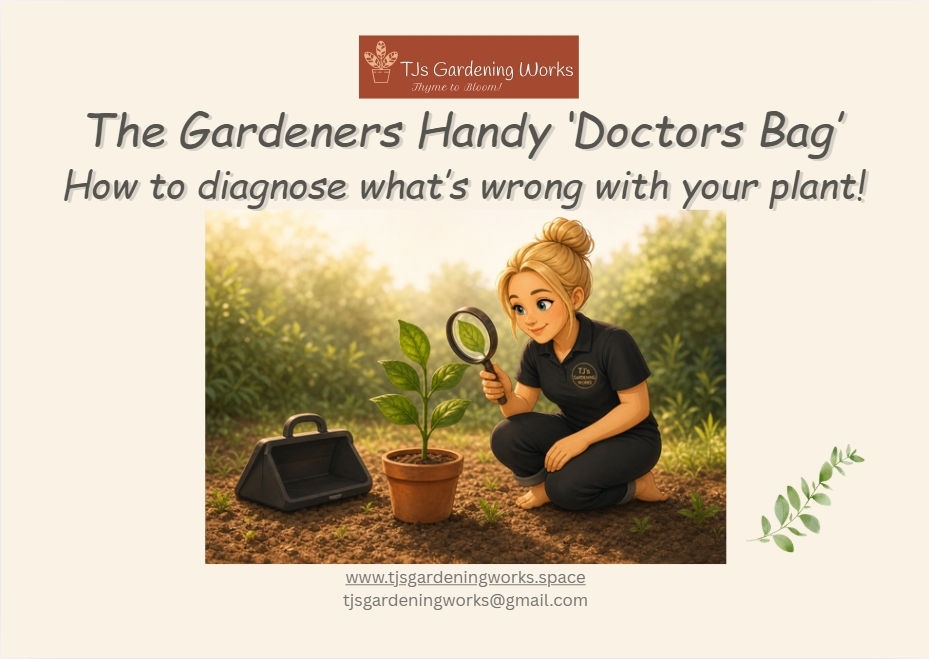
My 26 page guide to becoming a 'Plant Doctor'. Learn to identify and deal with all the common pests, diseases and disorders.

A 20 page detailed look at what hydrophobic soil is, how to fix it and prevent it ever happening again.

My bumper guide on all things soil. Learn how to identify your soil type with simple little experiments you can do right there at home. Understanding your soil type, how to care for it and what will like growing in it can save a lot of money and heartache down the track.

A lovely little 16 page guide to water saving practices and plant recommendations for a drying climate.
Don't forget to check out my debut book while you're here, Barefoot In The Backyard-Where It All Begins. It would make for a beautiful Christmas gift for any garden lovers in the family.


I wrote Barefoot in the Backyard: Where It All Begins because I genuinely believe that once you understand what’s happening beneath your feet, the way you garden begins to change.
So many of the problems we battle above the ground — plants that struggle, water that seems to disappear, pests and disease, gardens that need constant feeding and fixing — often have their beginnings below it. And soil doesn’t need to be complicated or wrapped up in
scientific language to understand it. Sometimes we just need someone to explain what’s actually going on down there, in a way that makes sense.
Across 196 beautifully illustrated pages, I’ll help you get to know your own patch of earth and understand how soil, compost, mulch, water, plant nutrition and all those wonderful little living things beneath our feet work together to grow a healthier, happier garden.
But this isn't a textbook.
It’s filled with fun little experiments you can try for yourself, practical garden recipes, beautiful illustrations, and warm stories from my own garden and from growing up with dirt under my fingernails. I want you to learn as you read, but I also want you to smile, reminisce, get curious, wander outside to investigate something — and perhaps begin looking at your own backyard a little differently.
Whether you're planting your very first garden or you've been gardening for decades, this is a book to keep close, scribble notes in, come back to, and hopefully treasure for years to come.
And Where It All Begins really is just that — the beginning.
There are more Barefoot in the Backyard books to come, taking us beyond the soil and further into creating, planting and enjoying the beautiful, living backyards we call our own💚

More Blogs You Might Find Interesting

There’s something almost mystical and other-worldly about the first time you see a barn owl glide across a paddock at dusk.
No wingbeat sound.
No warning call.
Just a pale, heart-shaped face drifting silently through the fading light like a ghost on the wind.
Here in South Australia, we are so lucky to call them our own

One of Australia’s most misunderstood garden legends: the blue-tongue lizard.
Now despite their tough-guy act, blue tongues are absolute sweethearts when it comes to our gardens and ecosystems. They’re not aggressive, they don’t want your lunch, (mind you they’ll snack on the cats food if you leave it out) and they’re certainly not plotting your downfall, they’re just doing an important job and hoping we’ll leave them be.

With climate patterns shifting and drought becoming a more common reality for so many of us, as gardeners we’re faced with the new challenge of how to keep our gardens thriving with less water.
Gardening during dry times isn’t about giving up and accepting defeat, it’s about getting smart and creative. By embracing some simple alternatives, our gardens can become more resilient, sustainable, and beautiful than ever.


